Self-Directed Learning
by Brittany Masching

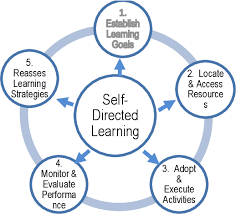
Self-directed learning is a movement empowering individuals to
lead their own educational journey based on their own curiosity and interests.
While many of us think the traditional school system is “education”, we forget
that that is simply a path or an option to education. In self-directed
learning, the individual likely isn’t in a class setting. The life learner
chooses what activities and experiences they want to explore. They are drawn to
these activities naturally as we are each unique and hold different interests.
The overarching goal is that the individual grows their knowledge through
experiences to create a meaningful and satisfying life for their given culture.
Why is Self-Directed Learning Important? It’s natural!
There are Four Educative Drives that
children naturally possess. These include curiosity, playfulness, sociability,
and planfulness. “Children, by nature, are
intensely curious, playful, and sociable, beginning at
birth or shortly after. A fourth drive, which we might call call planfulness
— the drive to think about and make plans for the future — emerges and
strengthens as children grow older. It is reasonable to refer to these drives
as the educative drives. The biological foundations of these drives,
encoded in DNA, have been shaped by natural selection, over our evolutionary
history, to serve the purpose of education” (“The Four Educative
Drives”). As opposed to traditional education, Self-directed Learning
focuses on these natural drives especially curiosity, playfulness, and
sociability.

Curiosity starts off the moment a baby is born!
“Aristotle began his great work on the origin of knowledge (Metaphysica) with the
words, “Human beings are naturally curious about things” (“The Four Educative
Drives”). Play is another key component of our natural drive to learn! There
have been countless theories and initiatives centered around the importance of
play and being outdoors specifically.
“Play is not recess from education; it IS
education” (“The Four Educative Drives”). The third drive consists of
sociability. Humans are naturally curious. Right away we observe babies grow by
watching their surroundings and trying themselves. Toddlers ask countless
questions by the minute! We have the natural drive to want to learn and explore
what’s out there. As American philosopher, Daniel Dennett stated,
“Comparing our brains with bird brains or dolphin brains is almost beside the
point, because our brains are in effect joined together into a single cognitive
system that dwarfs all others. They are joined by an innovation that has
invaded our brain and no others: language.” Humans can communicate not only
about survival necessities but about more complex things such as the future or
“what ifs”. Finally, the last drive that children more slowly develop is
planfulness. This drive allows children to make plans for their future and
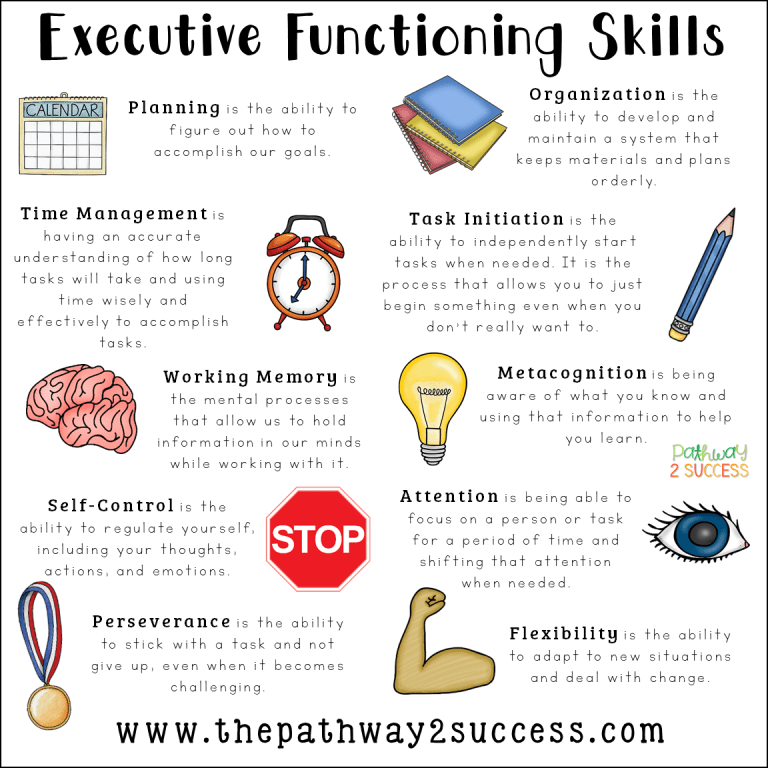
achieve their goals. Research has shown that children better develop their Executive Functioning Skills of the brain when given more independent time to play and
explore away from adults. Self-directed Learning provides this unstructured
opportunity for individuals to try new things and make changes when they fail
or make mistakes!

Implementing Student Choice and Self-Direction into Traditional Schooling
How can teachers and parents best serve their children’s education
pathway through traditional schooling? First, we have to recognize the importance
of giving students more choice in their day and letting them lead their own
paths! I don’t feel it’s a matter of educators purposefully getting in the way
of students' most natural ways of learning, but they are either uneducated on
self-directed learning or the pressures from state and federal guidelines have
halted their passions! In order to begin seeing change, we have to promote and
educate. School culture has to shift back to what’s best for the students! Do
we really believe the constant pressures of evaluation put on teachers and
students, the burden of state tests, and strict schedules and expectations are
the most welcoming environment to learn and grow?
Once we do a better job of educating and promoting how essential it
is to allow students a self-directed type of education, we must adopt a
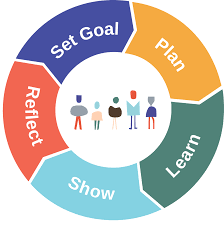
goal/growth mindset mentality. Through play and experiments and observing what
the students are each interested in, provide deeper opportunities! Give them
time to develop their executive functioning skills to plan for their own
futures and goals, but give them some resources along the way! Ask guiding
questions to help them reflect on a deeper level. Model or demonstrate
activities they want to try for themselves! Let the students teach you!

“The greatest sign of success for a teacher is to be able to say,
‘The children are now working as if I did not exist.’” ~Maria Montessori
‘The children are now working as if I did not exist.’” ~Maria Montessori
References:
Bergen, D., Coscia, J., Diamond, M., Hopson, J., Drew, W., Christie, J., … Wolfe, P. (1970, January 1). Neuroscience, Early Childhood Education and Play: We are Doing it Right! Retrieved March 31, 2020, from https://link.springer.com/article/10.1007/s10643-011-0447-z
DiTullio, G. (2018, November 9). Helping Students Develop Executive Function Skills. Retrieved March 31, 2020, from https://www.edutopia.org/article/helping-students-develop-executive-function-skills
The Four Educative Drives. (n.d.). Retrieved March 30, 2020, from https://www.self-directed.org/sde/drives/
Ginsburg, K. R. (2007, January 1). The Importance of Play in Promoting Healthy Child Development and Maintaining Strong Parent-Child Bonds. Retrieved March 31, 2020, from https://pediatrics.aappublications.org/content/119/1/182
Loyens, S.M.M., Magda, J. & Rikers, R.M.J.P. Self-Directed Learning in Problem-Based Learning and its Relationships with Self-Regulated Learning. Educ Psychol Rev 20, 411–427 (2008). https://doi.org/10.1007/s10648-008-9082-7
Comments
Post a Comment